Silymarin is the active flavonolignan complex found in milk thistle (Silybum marianum). Supplement manufacturers use it mainly for liver support[5]. This guide explains what silymarin is, where it comes from, how producers extract and standardize it to 80%, and how to choose a reliable silymarin supplier.
1. What Is Silymarin?
Silymarin is not a single compound. Instead, it is a mixture of four main flavonolignan isomers in milk thistle seeds:
Silybin — the most active form, making up 60–70% of the complex
Isosilybin
Silychristin
Silydianin
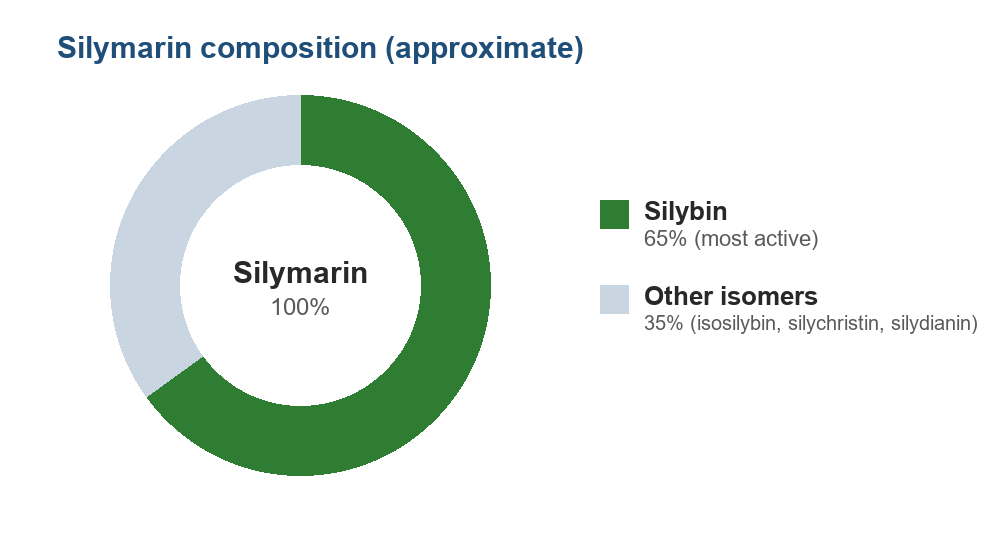
People often confuse these terms. Milk thistle is the plant, silymarin is the standardized seed extract, and silybin is the single most abundant component inside it[2,3]. Silybin also protects cells against oxidative stress and related damage[6].
2. What Is the Best Source of Silymarin?
Milk thistle seeds are the best natural source of silymarin. The plant Silybum marianum grows mainly in:
China — Liaoning, Heilongjiang, and Hebei are the main growing regions
Europe
North Africa
Seed quality depends on the growing region, harvest time, and drying process. Milk thistle prefers a cool, temperate climate. China grows it at scale, so its extract supply chain is mature and cost-effective[4].
3. How Is Silymarin Extracted?
Producers follow four main steps:
3.1 Pretreatment — clean, dry, and crush the seeds, then remove the seed oil.
3.2Extraction — reflux the powder in ethanol, acetone, or supercritical CO2.
3.3 Purification — pass the extract through macroporous or polyamide resin.
3.4Standardization — adjust and verify the final silymarin content.
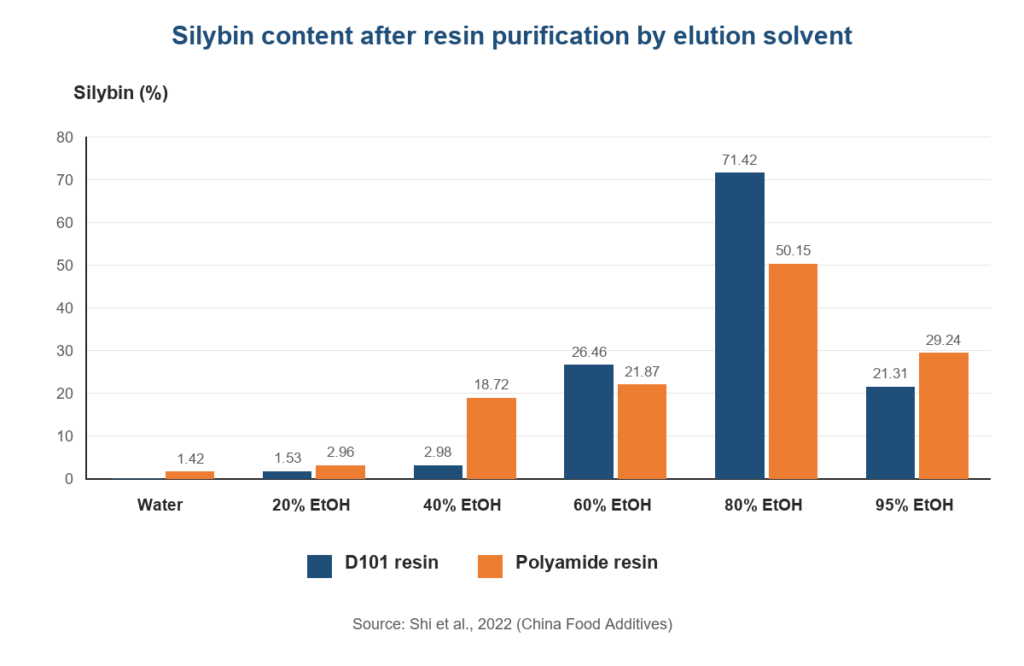
Ethanol extraction with resin purification is the most common industrial method. One optimized process uses 12.5 volumes of 65% ethanol at 95 °C for two hours, repeated three times, then elutes with 60% ethanol on D101 resin. It yields a light-yellow extract with at least 20% silybin[1]. Newer methods include ultrasonic, microwave, and enzyme-assisted extraction[2].
4. What Does 80% Silymarin Mean?
An 80% silymarin extract contains 80% total silymarin by weight. Two tests confirm this value:
UV — measures total silymarin quickly and at low cost.
HPLC — separates and quantifies silybin A+B and each isomer.
HPLC gives the most accurate result, so buyers should confirm the testing method on the certificate of analysis. UV can overstate total silymarin, while HPLC reports the precise silybin A+B content. Standard grades range from 30% to 95%. Higher percentages cost more but deliver more active ingredient per dose.
5. What Should Buyers Look for When Purchasing Silymarin Extract?
Before you buy, check these five points:
5.1Standardized content and the exact HPLC or UV test method
5.2A complete COA with batch number and production date
5.3Heavy metal, pesticide, and residual solvent limits
5.4Microbiological specifications (total plate count, yeast, and mold)
5.5Batch-to-batch consistency from the manufacturer
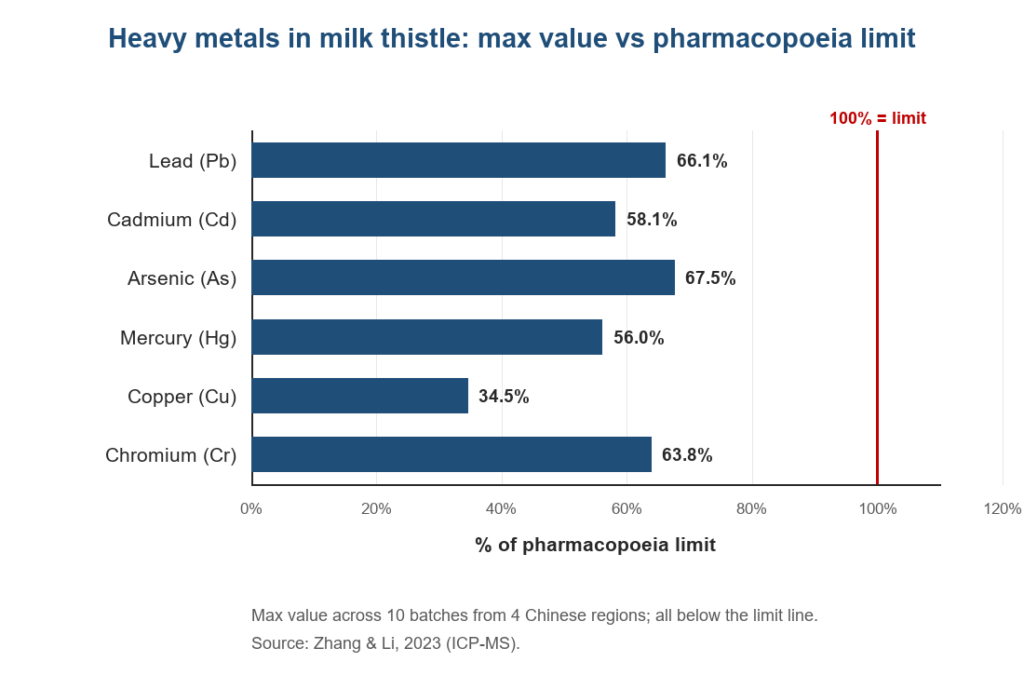
Heavy metal control is essential. An ICP-MS study of ten batches from four Chinese regions found lead, cadmium, arsenic, mercury, copper, and chromium all within pharmacopoeia limits[4].
6. Silymarin Manufacturers and Suppliers
China is a major source of silymarin extract. Manufacturers and trading companies differ in important ways. A factory usually offers:
6.1Direct production and lower pricing
6.2In-house HPLC and UV testing
6.3Food-safety certifications such as ISO 22000, HACCP, FDA, Kosher, and Halal
6.4OEM and private-label services
Choose a manufacturer with complete documentation, stable batches, and export experience in North America and Europe.
7. Frequently Asked Questions About Silymarin
Where does it come from? It comes from the seeds of the milk thistle plant.
How do I get silymarin naturally? You can eat milk thistle seeds or take a standardized extract supplement.
What milk thistle extract has 80% silymarin? Look for milk thistle extract standardized to 80%.
Who sells silymarin? Botanical extract manufacturers and ingredient suppliers sell it in bulk.
Conclusion
Silymarin comes from milk thistle seeds. Producers extract it with solvents and resins, then standardize it to 80%. Check the testing method, COA, and certifications before you buy. Shaanxi Huaze Biotechnology Co., Ltd. supplies standardized milk thistle extract with full documentation. Request a sample or quotation today.
References
1. Shi W, Li W, Wang D, et al. Study on extraction and purification technology of silybin from Silybum marianum. China Food Additives. 2022;(10):99–107.
2. Liu L. Research advance in extraction methods and pharmacological activities of silymarin. Journal of Hebei North University (Natural Science Edition). 2019;35(10):51–56.
3. Zhang S, Yang S, Zhang H, et al. Research progress of active ingredients in Silybum marianum and their extraction methods. Ginseng Research. 2012;(4):51–54.
4. Zhang H, Li C. Determination of six heavy metal elements in milk thistle from different origins by ICP-MS. Ginseng Research. 2023;(5). doi:10.19403/j.cnki.1671-1521.2023.05.004.
5. Li D, He S, Hou H. Effect of silybin on liver fibrosis and Th17/Treg in patients with nonalcoholic fatty liver disease. Chinese Journal of Clinical Rational Drug Use. 2026;(26). doi:10.15887/j.cnki.13-1389/r.2026.26.023.
6. He M. Mechanism of silybin on oxidative stress-induced apoptosis and autophagy protection in KK1 cells (master’s thesis). Shenyang Agricultural University. 2024.